
Physiotherapists see all kinds of musculoskeletal conditions in the clinic, but not many people are aware that we can also treat some kinds of dizziness and vertigo.
Definition of Vertigo: the sensation that the environment around you is spinning. Vertigo can be associated with nausea, eye flickering, balance difficulties and ringing in the ears.
Vertigo is a symptom that can be caused by several different conditions, and different conditions require different management options. Two common causes of vertigo that physiotherapists can manage includes your inner ear and your neck.
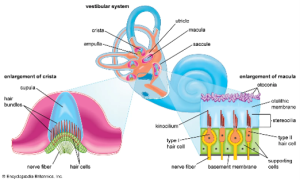
- Benign Paroxysmal Positional Vertigo (BPPV)
The inner ear is a complex structure made of a maze of canals. Inside the canals are little crystals that are embedded in a bed of jelly. When your head turns, the crystals wobble the jelly which send signals to tell the brain that you are moving.
Sometimes these crystals become dislodged and start rolling around. This will manifest as feeling vertigo for a few seconds when you lay down in bed or roll over. This type of vertigo is commonly associated with flickering eyes when the vertigo happens.
BPPV is managed with an easy technique called the Epley’s manoeuvre. This is completed at least once to help move the ear crystals back into the right spot (Hilton et al., 2014). The patient can be taught how to complete this technique at home to ensure that if they have subsequent instances of BPPV, they are equipped with the tools to self-manage this condition.
In cases where Epley’s manoeuvre is contraindicated or not fully successful, vestibular rehabilitation can be completed, where tailored exercises are prescribed to re-train the vestibular system to get used to sudden movements again (Bressi et al., 2017).
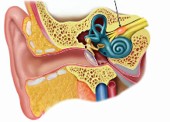
- Vestibular Neuritis
This is a condition where the nerve that connects to your ear becomes inflamed and results in vertigo, the sensation of full ears, balance changes and nausea. It is seen to come on before or after a viral infection. Compared to BPPV where symptoms occur with movement and resolve quickly, vestibular neuritis vertigo tends to be more constant. A GP can prescribe different medications to help with reducing nausea and inflammation. Concurrently a physiotherapist will prescribe vestibular rehabilitation to gradually expose the vestibular system to the things that are most aggravating (Tokle et al., 2020).
- Cervical spine related dizziness
Another cause of vertigo is related to your cervical spine, or your neck. Due to the complex nature of the nerves that exit your neck, if there is neck stiffness, pain, or other impairments, it can result in changing the way the signals are sent to your brain. It can also be associated with headaches. This form of dizziness will feel different and less “violent” compared to BPPV or vestibular neuritis, and it can last a few minutes up to a few hours at a time (Wrisley ey al., 2000). Aggravating factors might include prolonged head postures.
Cervicogenic dizziness can be managed in different ways. Physiotherapists will often use manual or “hands-on” therapy to help with symptom management. From there, exercises will be used to address deficits in the strength, endurance or control of the neck, in addition to exposure to aggravating factors once the patient is ready (De Vestel et al., 2022).
References